
Everybody Bleeds on Rat Jaw - Barkley Fall Classic
Tell someone who’s run the Barkley Fall Classic (BFC) that you’re running it, and their eyes widen, a big dumb grin spreads across their face, and they immediately get excited.
This year I ran it with my son Ronnie. He’s 17 and I’m 45. Last year we ran 125 miles together at Sedona, so you’d think a 50K wouldn’t make us nervous. But we’ve talked to enough people who did the race to know better. It did make us nervous.
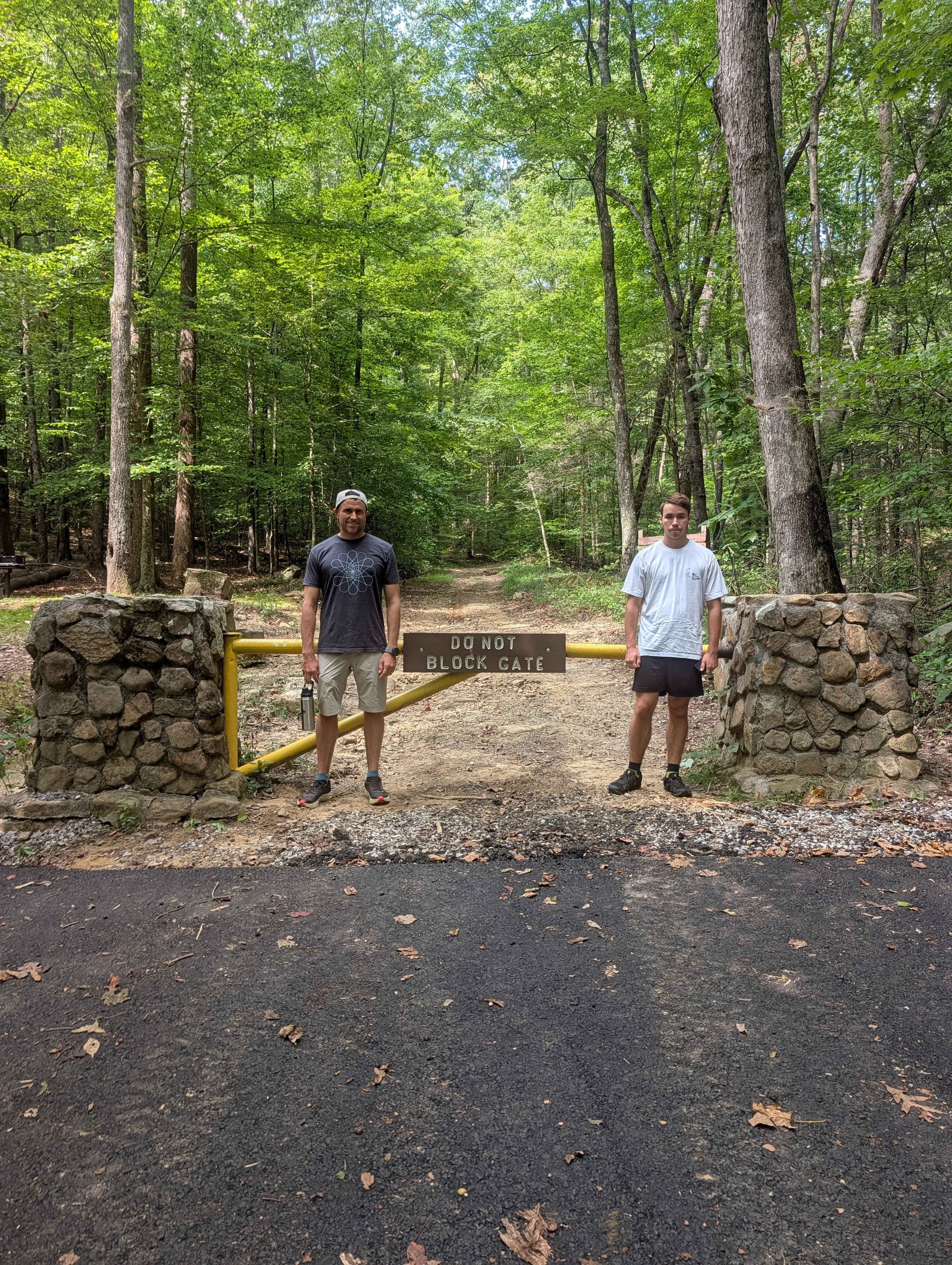
The day before the race we flew into Tennessee and proceeded directly to Frozen Head State Park to get a photo at the famous yellow gate from Barkley Marathons. Barkley Marathons was made popular by the 2014 documentary film The Barkley Marathons: The Race That Eats Its Young. Barkley Marathons is like the big brother to BFC. Barkley Marathons has only been completed by 20 people and many years it has 0 finishers.
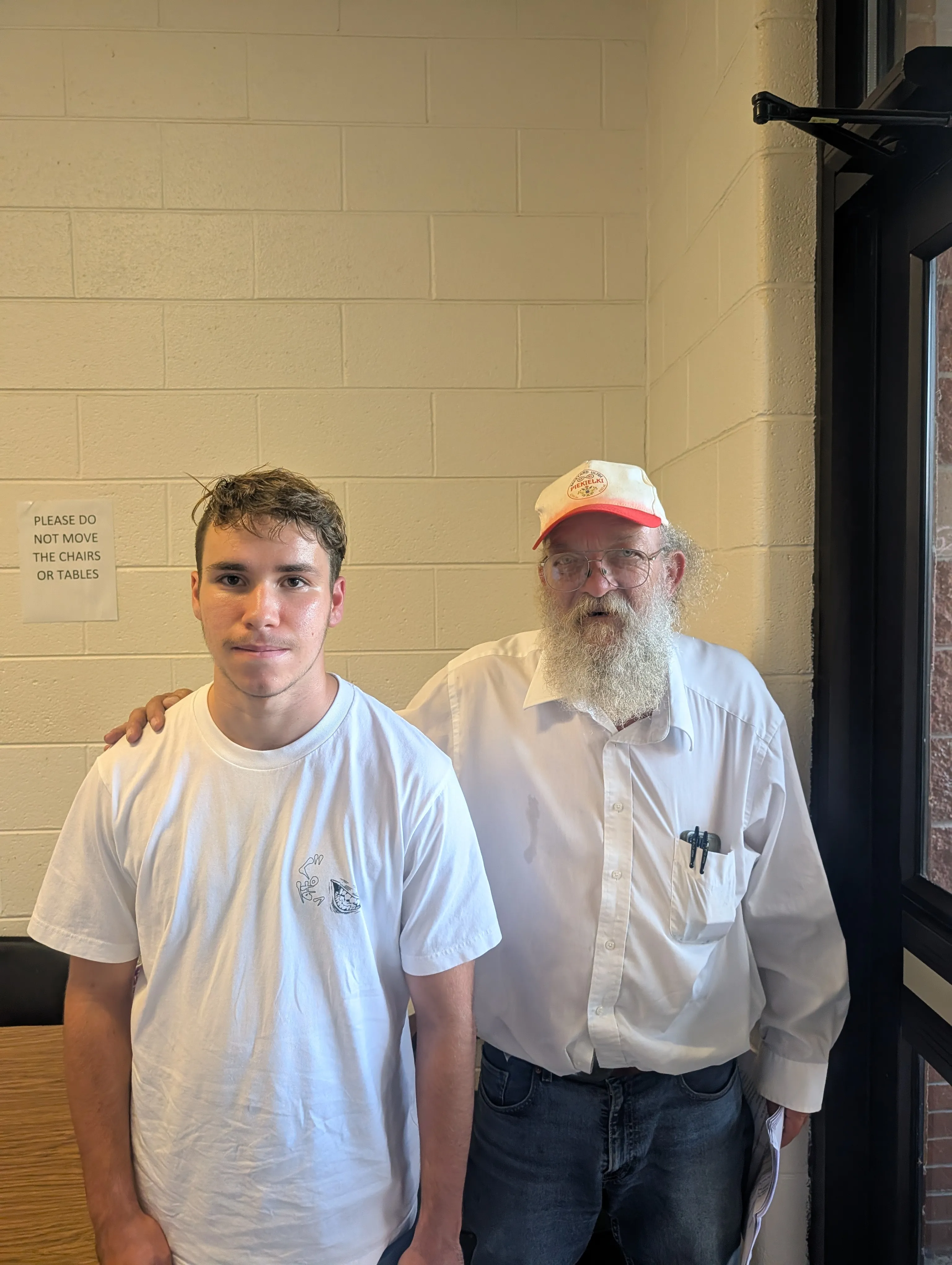
After killing some time at the yellow gate and buying some swag from the gift shop, we went to packet pickup at Coalfield High School. Ronnie had a chance to meet Laz and get his photo with him. Laz is the race director responsible for Barkley Marathons and many other well-known races, and he invented backyard ultras. Laz has become a legendary figure in ultrarunning for creating races that push runners right up against the line between what seems possible and impossible.
At packet pickup you get your map and strategize with fellow runners. Post a picture of the map on social media and you will get banned for life. We knew Viktoria Brown (an accomplished Canadian ultrarunner) was also doing the race, and had done it last year, so she gave us a bunch of information and helped us make sense of the map.
This race has both a marathon finish and a 50K finish. When you reach the end of the marathon, you hit a decision point where you choose whether to stop and take the marathon finish or continue on for the 50K. The catch is that if you choose to continue but don’t finish the 50K before the cutoff, you don’t fall back to a marathon finish, you get a Did Not Finish (DNF). And the actual course distance is much longer than advertised, so the extra section is considerably more than 8km.
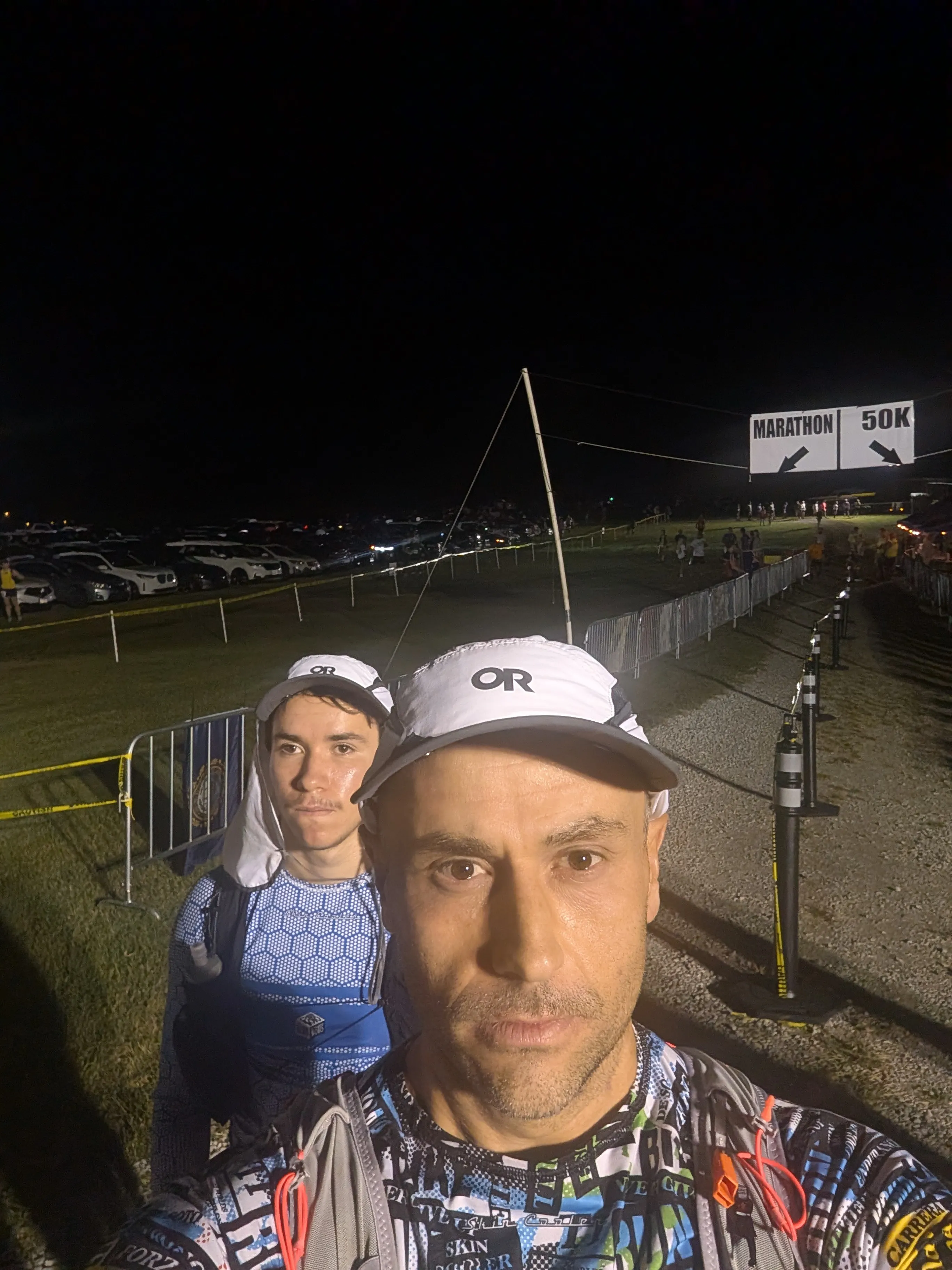
Before the start we took a selfie in the dark under the decision point sign. Marathon to the left, 50K to the right. We’d find out which way we were going around 11 hours later. I figured before this race that we’d go for the marathon, learn what the race is all about, and come back for the 50K another year when we were more experienced. Ronnie insisted that he wanted to go for the 50K. I told others half jokingly that I would enjoy watching his spirit break throughout the run.
Going into BFC we each had split and conflicting emotions between confidence and fear. On one hand, we knew BFC doesn’t have many of the challenges you’d face in other ultramarathons:
- Time on course: BFC’s cutoff is 13h20m vs Cocodona’s 102 hours.
- Max elevation: BFC is 3,300ft with ~91% oxygen vs Tahoe’s 10,000ft with ~70%.
- Distance: BFC is 50-65km vs Cocodona’s 400km.
- No days of sleep deprivation or hallucinations.
- Total climbing: BFC has 10,000-13,000ft of gain vs Cocodona’s 39,410ft.
- Temperature swings: BFC heats up during the day, but Cocodona can swing from 100°F to 20°F.
On the other hand, we knew it would be grueling and very hard for hours on end:
- GPS is banned. I’m not a navigator and normally rely on my watch and phone.
- Expect a high heart rate for most of the day.
- No pacing information from your watch, and the advertised 50km distance is probably a lie.
- Poles are banned, so you have only your legs and your arms when it gets very steep.
- The course is secret until you’re given a cloth map the night before.
- There are course markings, but they’re missing in a lot of places.
- Some aid stations had one portajohn, some had none. The start had plenty.
- Rat Jaw means scrapes, cuts, and bleeding from briars.
- Gel packets are banned to prevent trail litter.
- Many climbs are steep and straight up. Elevation gain per kilometer is higher (steeper).
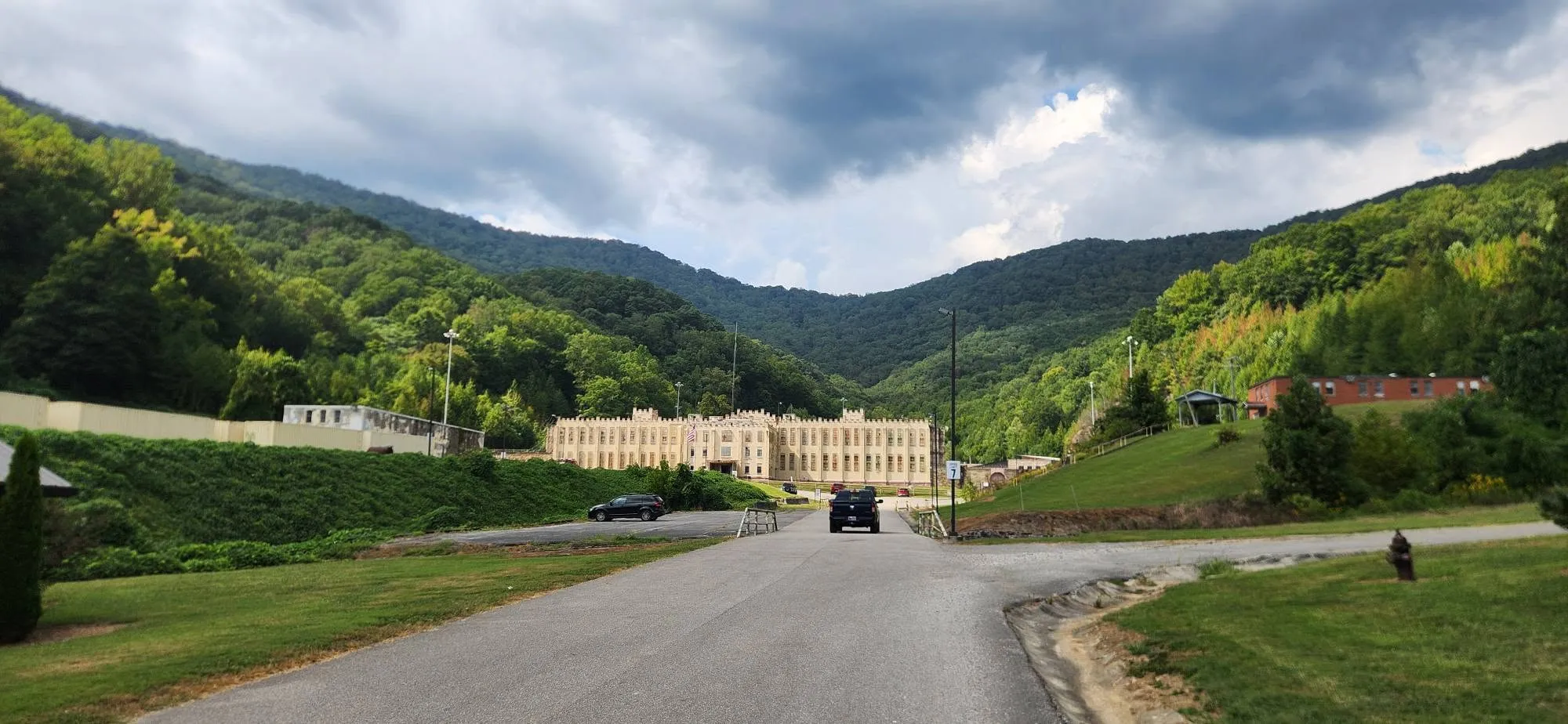
The race starts and finishes at the old Brushy Mountain prison. James Earl Ray, who assassinated Martin Luther King Jr., escaped Brushy Mountain in 1977 and was captured about 54 hours later, roughly 8 miles from the prison.
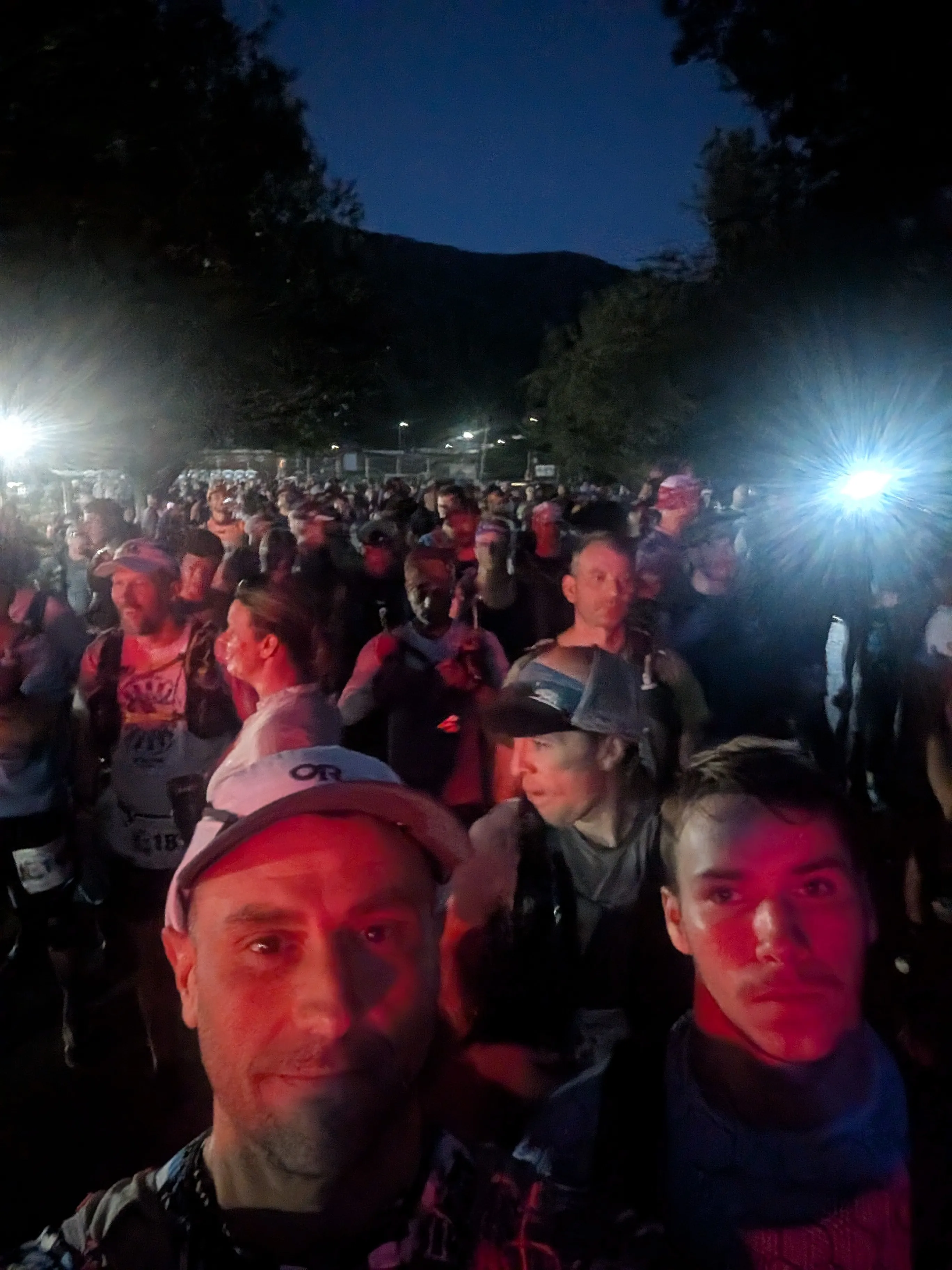
There’s no gun or horn at the start. Laz lights a cigarette, and that’s the start.
The race started on road for a couple miles uphill to get to a hill known as Rat Jaw. Running uphill for a couple miles is pretty hard, but that’s the easiest part of the race.
Ronnie and I ran almost the entire time trying to get there fast to avoid as much of the conga line that we knew would form there as possible. At BFC you don’t want to be first up Rat Jaw because you’ll be crushing a path through thick briars all the way up and paying the price for it. But you also don’t want to be towards the back, because you’ll want to be going faster but you can’t.
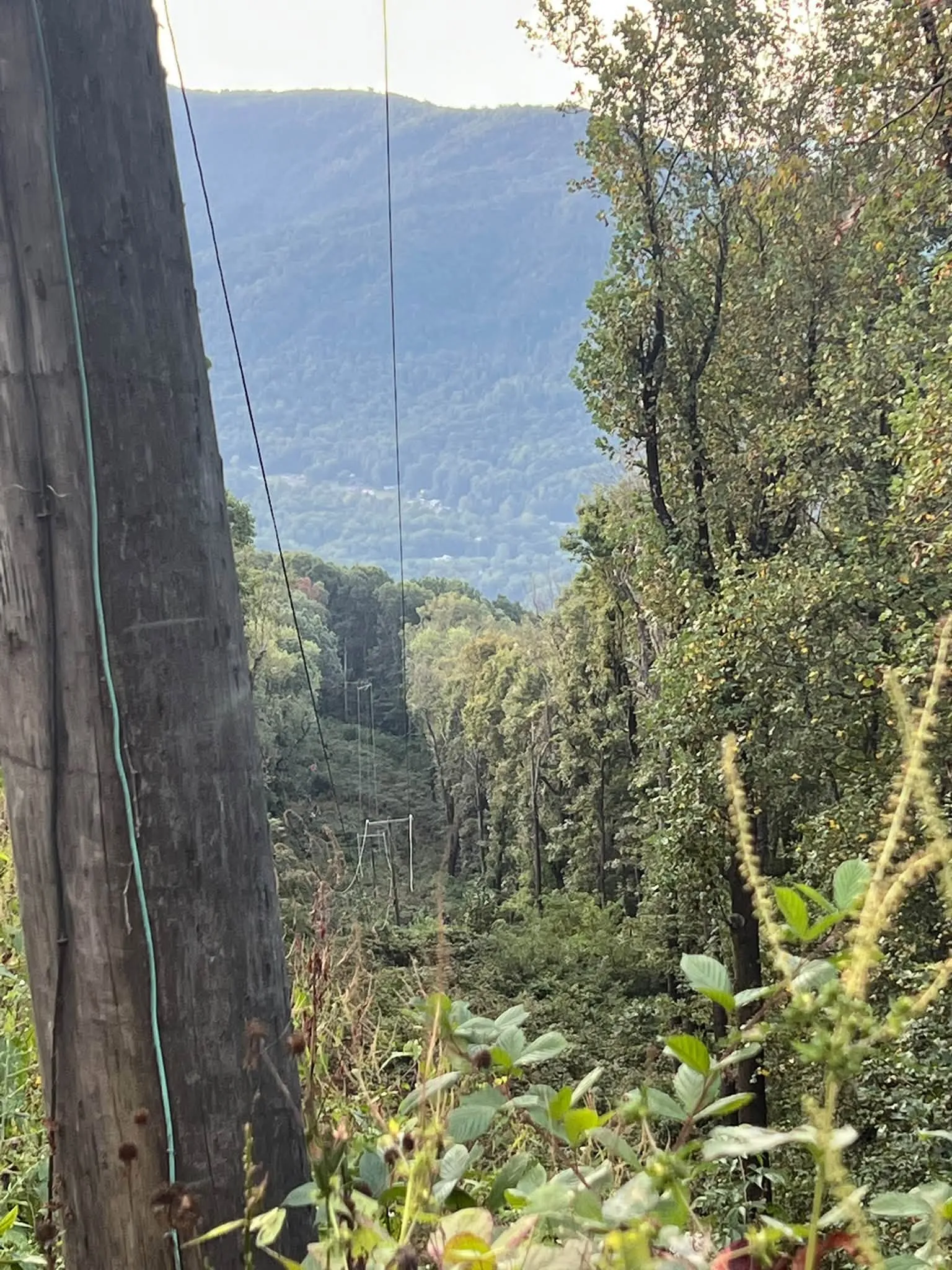
Rat Jaw isn’t a trail people are allowed to go on throughout the year. It’s a power line that cuts straight up the mountain with 6-foot briars that cut you up as you climb through them on all fours trying not to fall backwards from the steepness.
As we climbed up, I remember having a heightened sense of alertness. I looked down at someone’s legs and saw blood, not just in one spot, but 7–8 different places. I told Ronnie, “Look at that guy’s legs!” Ronnie told me he was bleeding too and pointed to the red on his high white socks. I quickly learned: everybody bleeds on Rat Jaw. The best training for Rat Jaw is on a Jacobs Ladder, because you are often on all fours climbing through thick briars on your hands and legs.
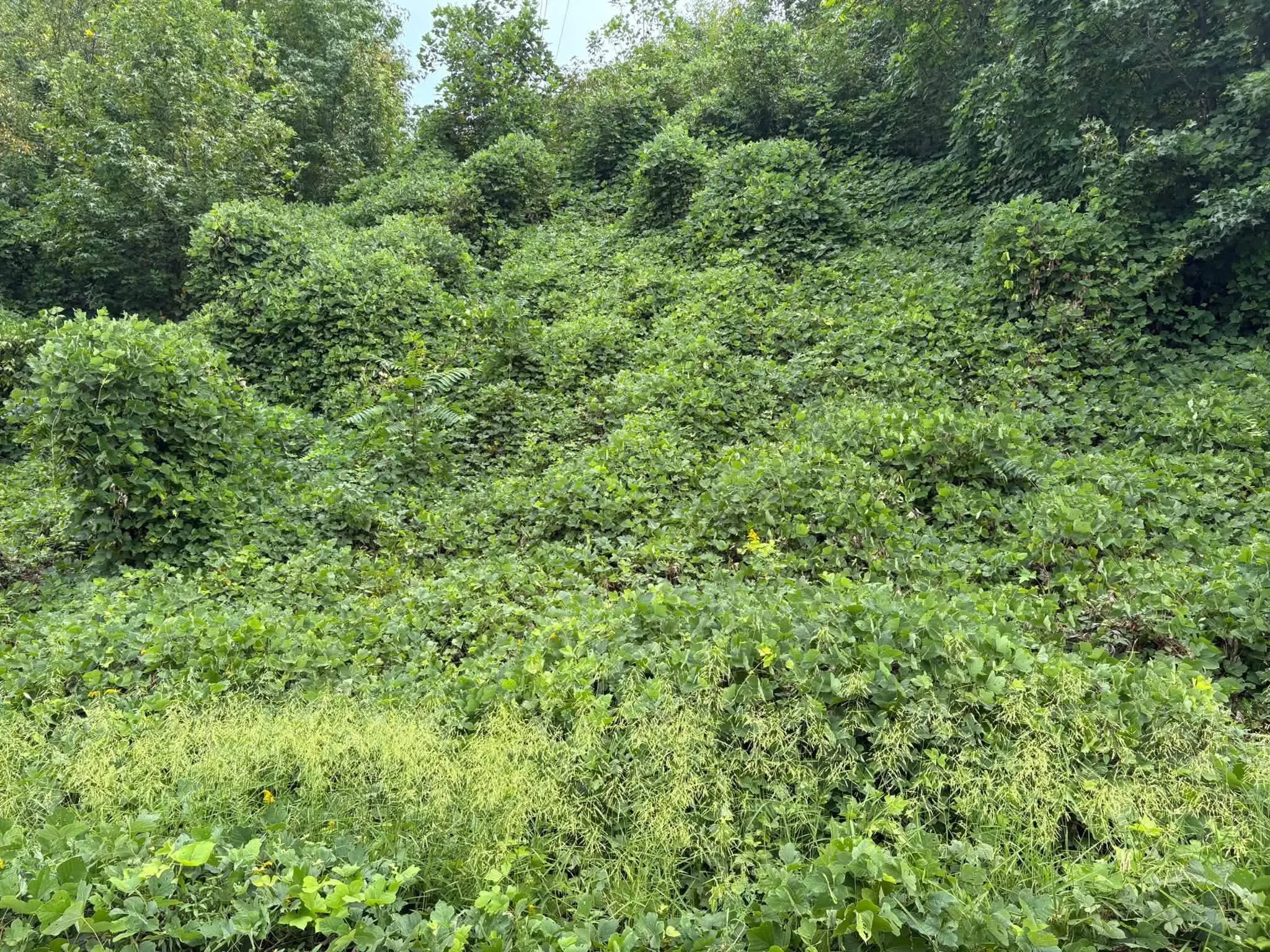
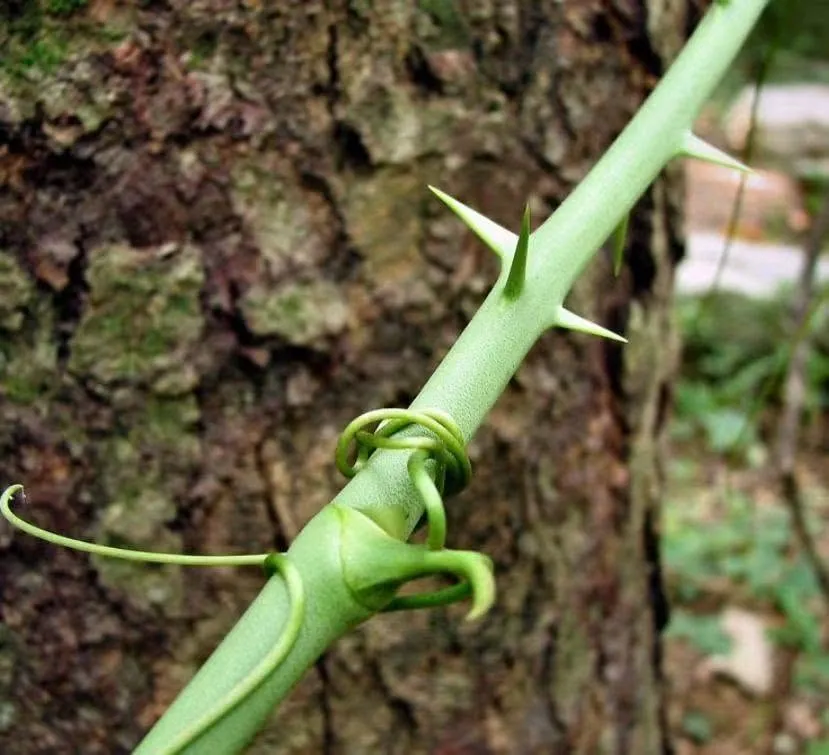
Here’s an example from another year of the damage Rat Jaw can do, on a local runner who was close to the front (photo shared with permission from Derek Mulhall).
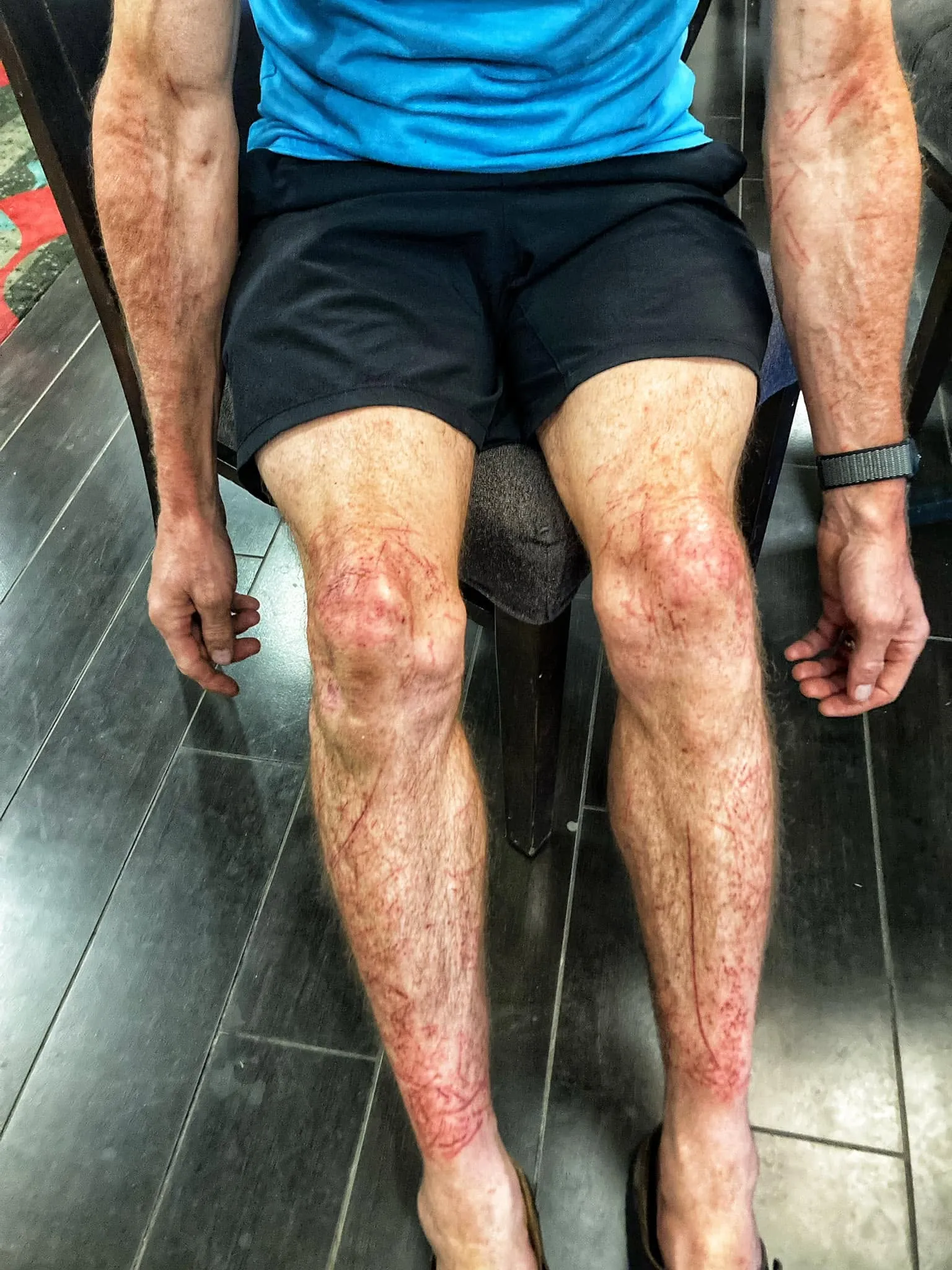
We were better off because we wore long sleeve DeSoto running shirts, which were perfect, and long running socks, which were completely shredded after one pass through Rat Jaw.
Here’s Ronnie going through a quieter part of Rat Jaw. It was slow going the whole way with intermittent pokes and scrapes. Most people (including us) wore thick gloves, which helped but didn’t stop us from getting poked.
Someone didn’t want to wait for the conga line, so they climbed a tree to get up over a cliff. Someone else screamed out, “How do you even lift yourself up there with those giant balls of yours!”
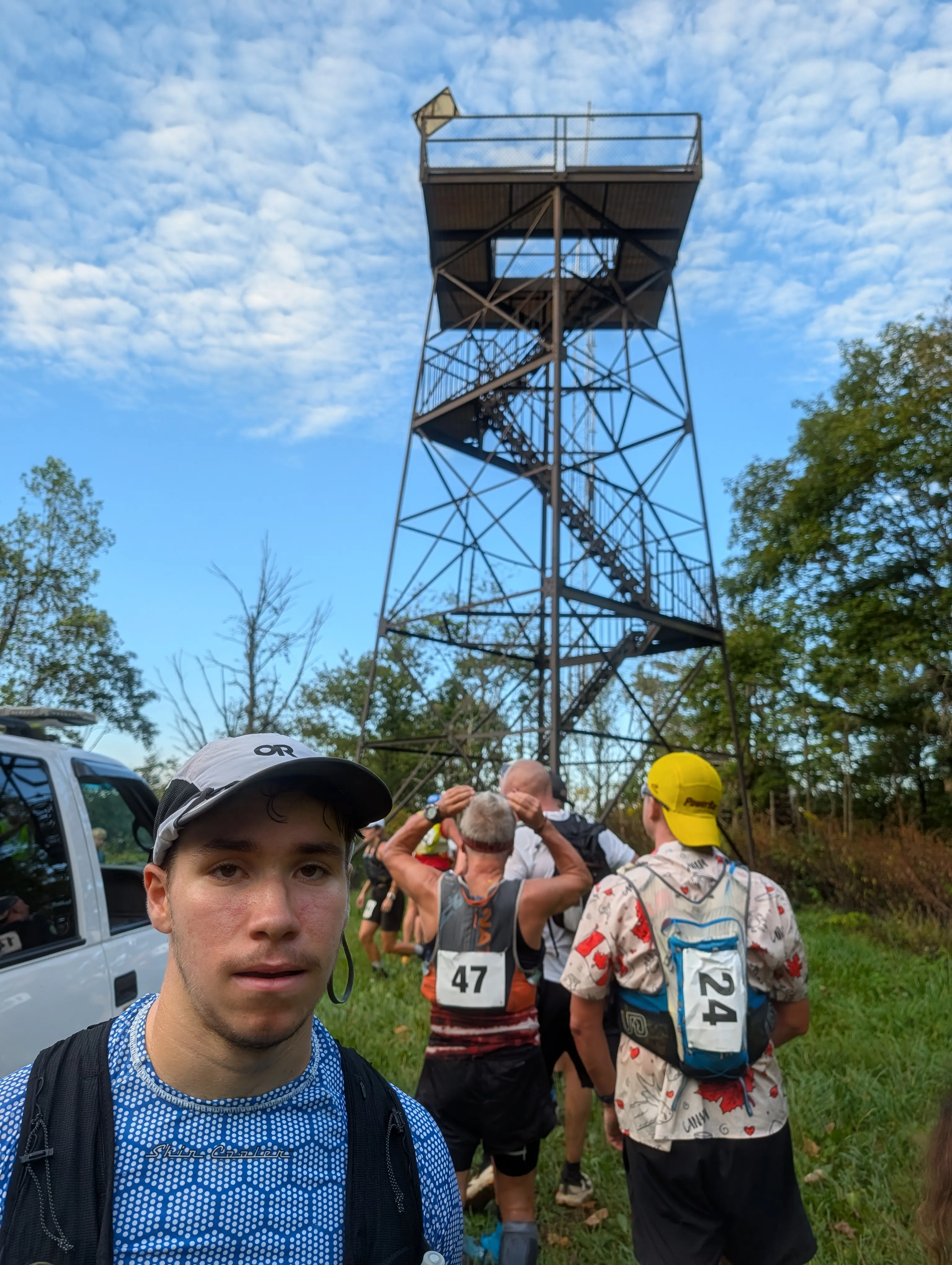
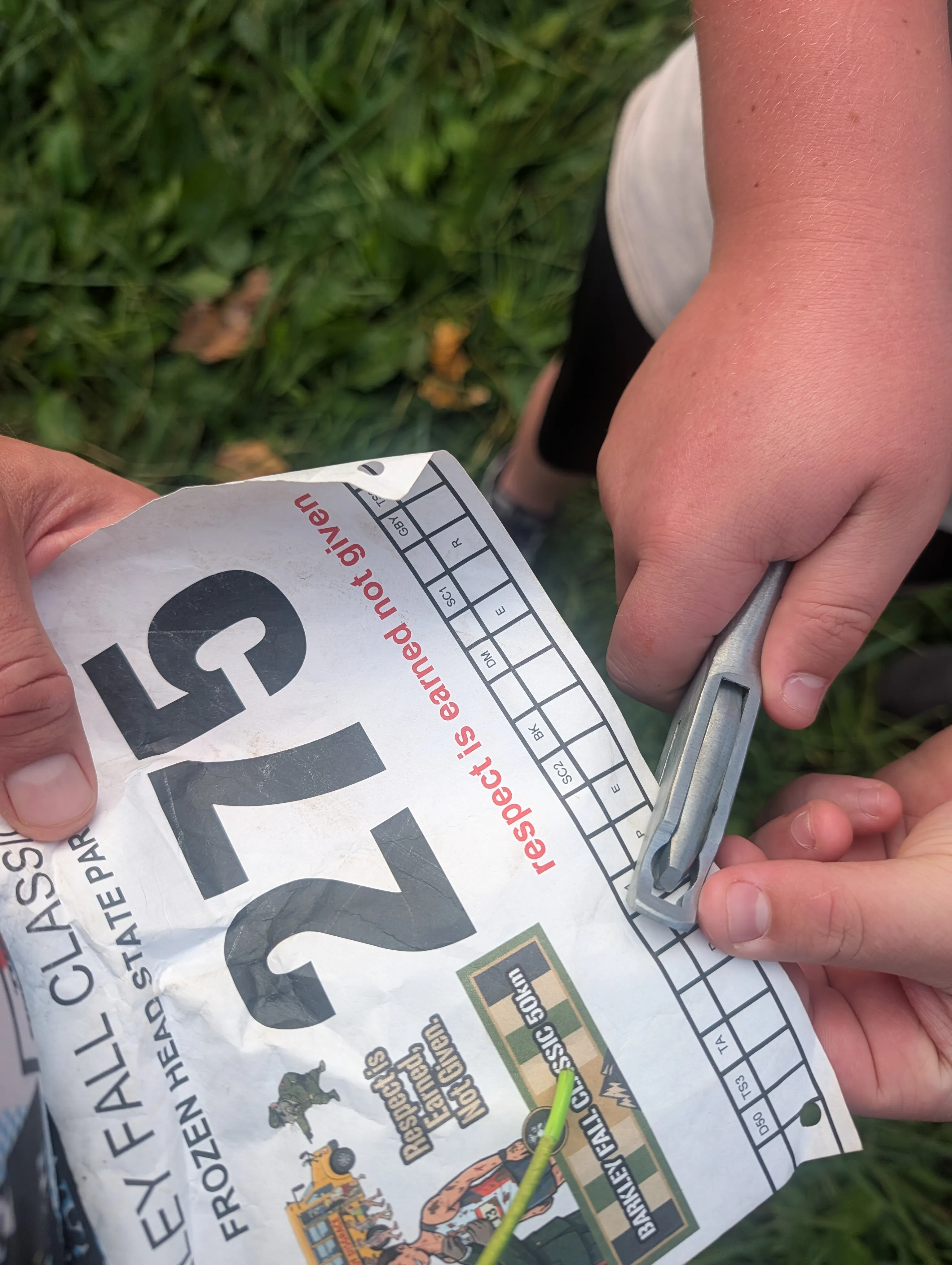
After making it up Rat Jaw we reached the top, which has a fire tower. This is the first place you get your bib punched, at the top of the tower. At the end of the race, if you don’t have your bib punched the required amount of times, you’re DNF’ed.
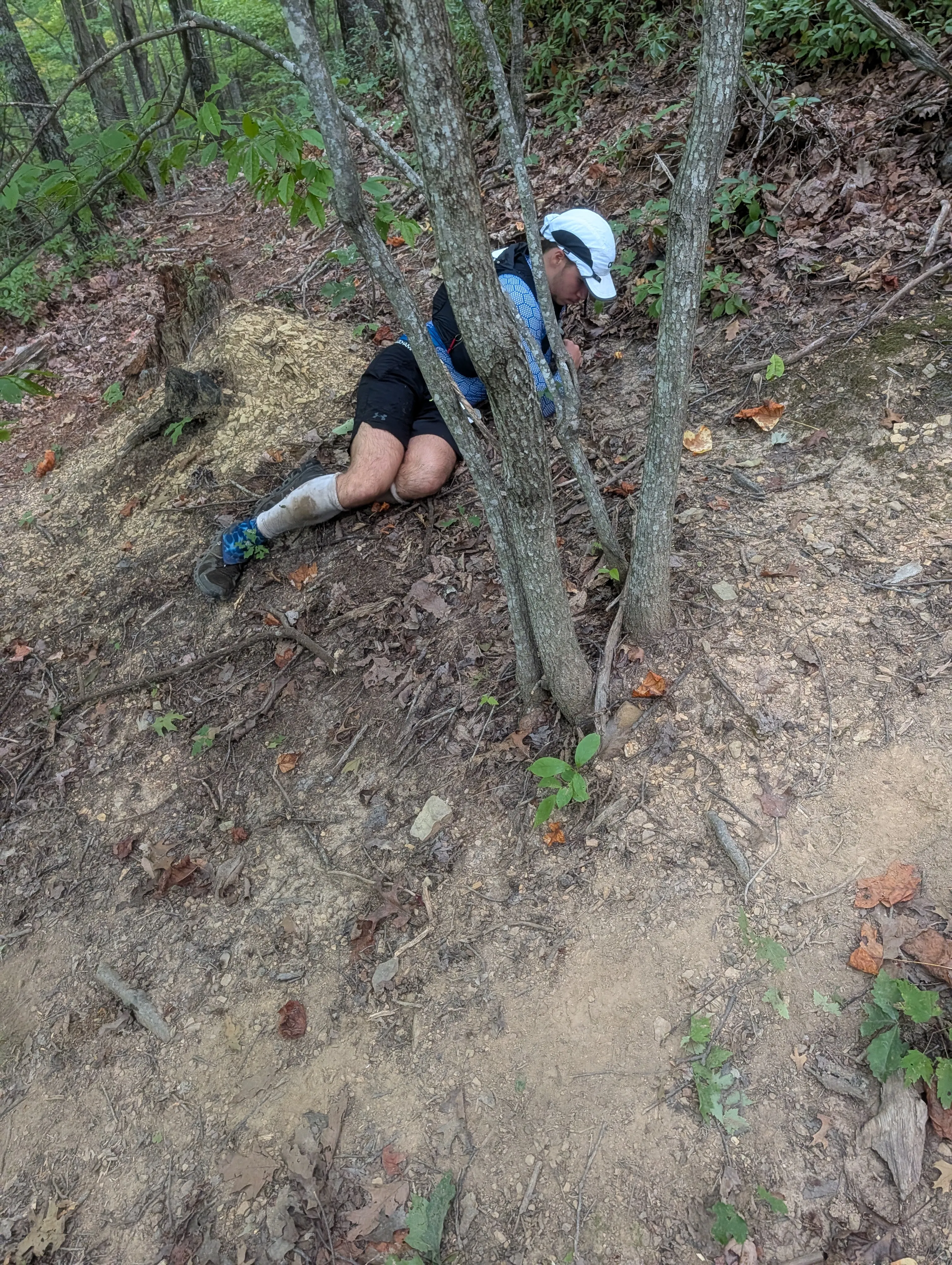
After Rat Jaw was a long semi-technical downhill section. We ran this section very fast and made up a lot of time. I rolled my ankle a couple times, and we both tripped and fell a couple times. Ronnie fell off the side of the trail down a fairly steep cliff twice. The first time I slid down with him and grabbed him, and the second time he rolled down but caught himself on a tree. I think I embarrassed him by screaming out “Ronnie!” as I thought he was flying off the mountain to his doom.
That took us to the 2nd aid station and we proceeded up Bird Mountain. This started with some switchbacks so felt not too bad, but quickly turned into a death march going straight up the mountain. You learn to appreciate switchbacks when running BFC. If there are switchbacks, that means the climb is controlled, it’s not just straight up. When it was straight uphill we’d take breaks and die for a few minutes to recover before getting back up and proceeding.
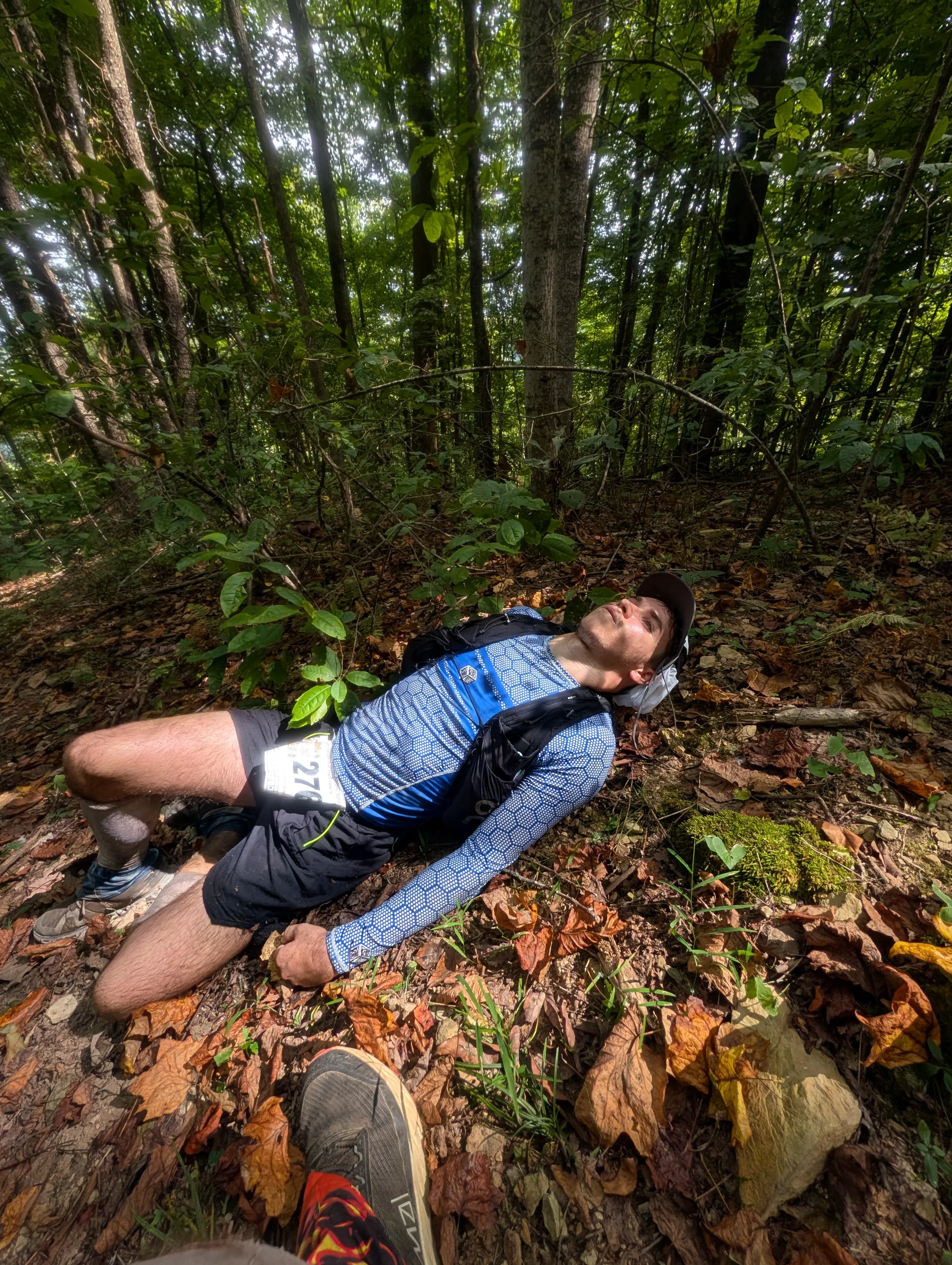
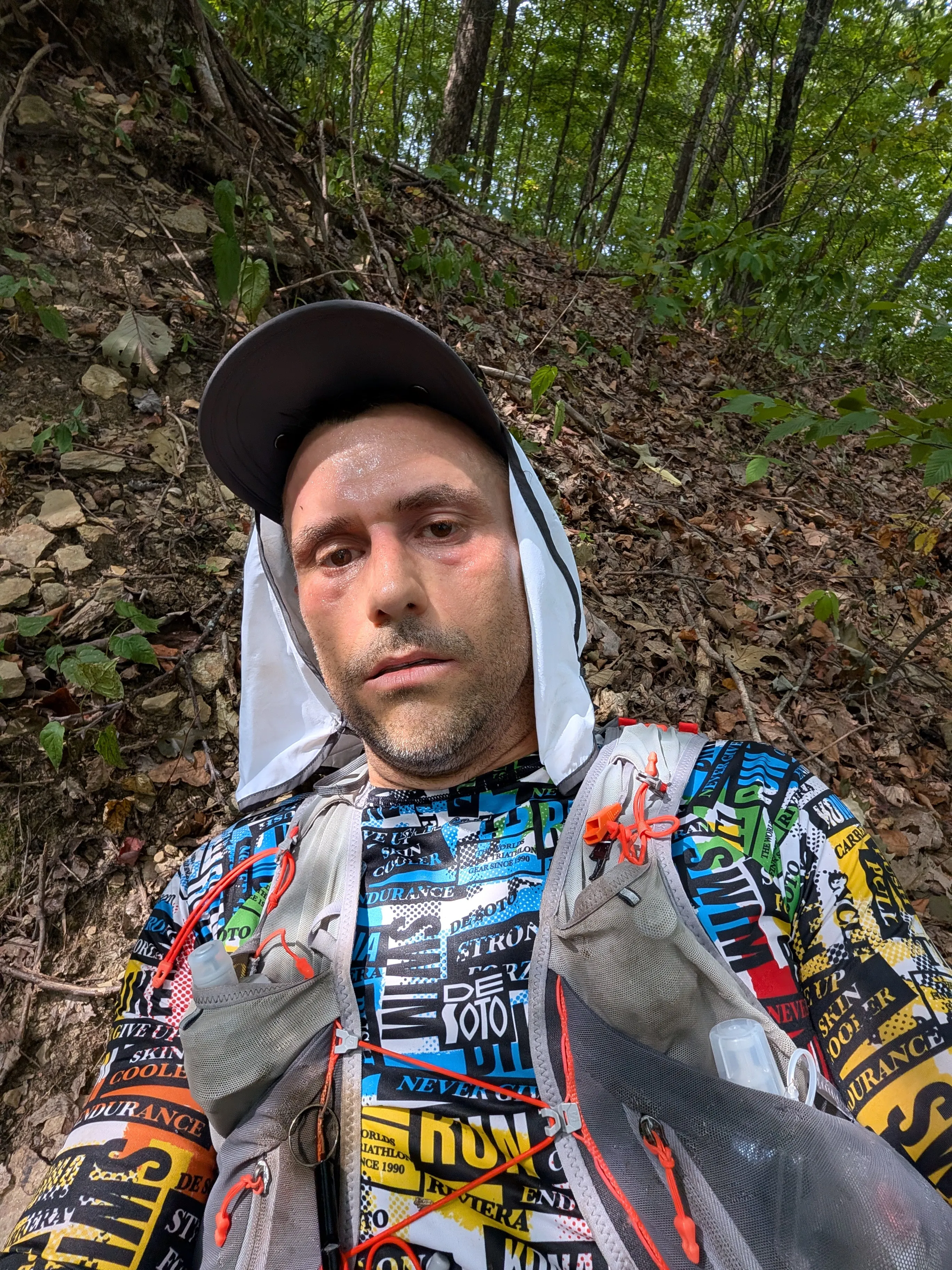
Much later after going up another brutal climb without switchbacks to Bald Knob (nice names here lol), we reached Chimney Top. The signs warned of a grueling 7-mile trail, and it felt like it never ended. I remember saying when we were probably about 5% up that we must be 50% up by now. My legs started spasming. The only other race where that’s happened to me was HURT 100. Chimney Top doesn’t end.
During Chimney Top about 50% in, an older lady was out of water and looked half dead. I shared some of my water and so did a few other runners. And then she was gone, way faster than us - lol.
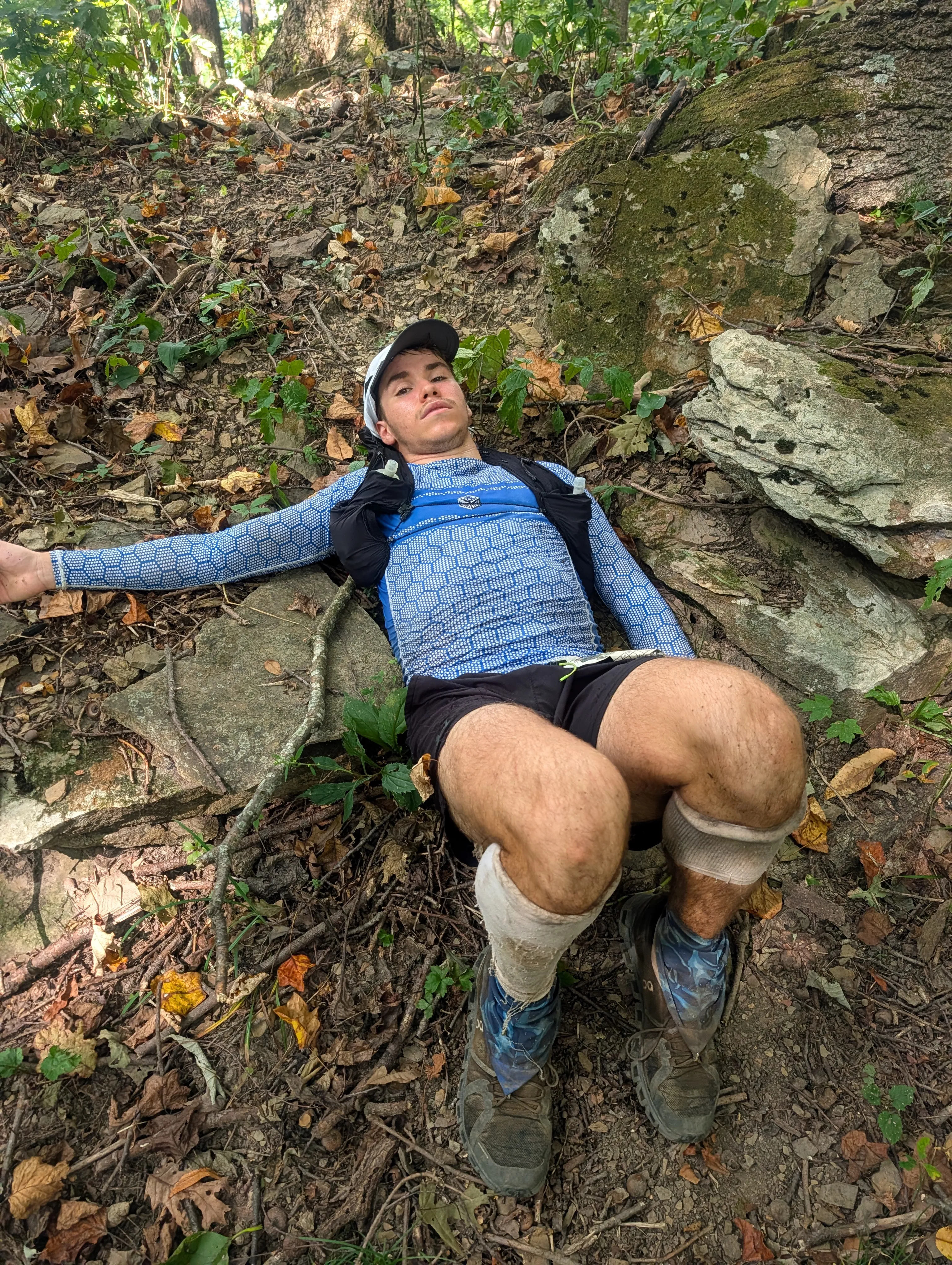
Without GPS, you don’t really know your pace during the race, but looking at the official checkpoint data afterward, some sections averaged around 30 minutes per mile. The funny thing is that we actually ran the parts we could, which was probably about half the race. So that goes to show how slow it could get on some of these climbs.
We got back to the fire tower at mile 24 (maybe? who knows what the distance was), 10 hours and 12 minutes into the race.
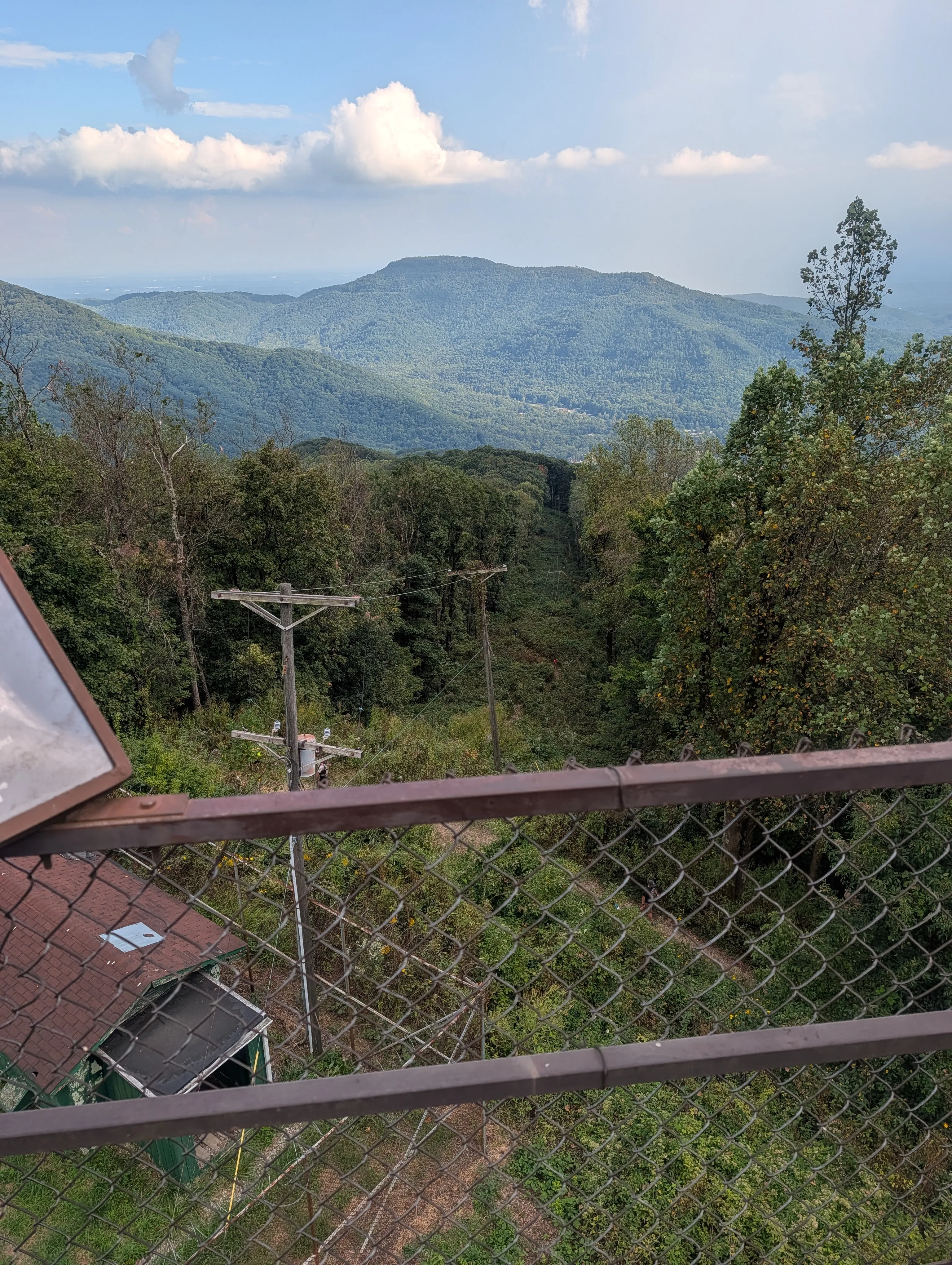
Another climb down Rat Jaw was next. Ronnie noted that going down was worse than going up. His legs kept giving out. I annoyed him as I tried to hurry him along.
By the end of the race Rat Jaw looked nothing like it did in the morning.
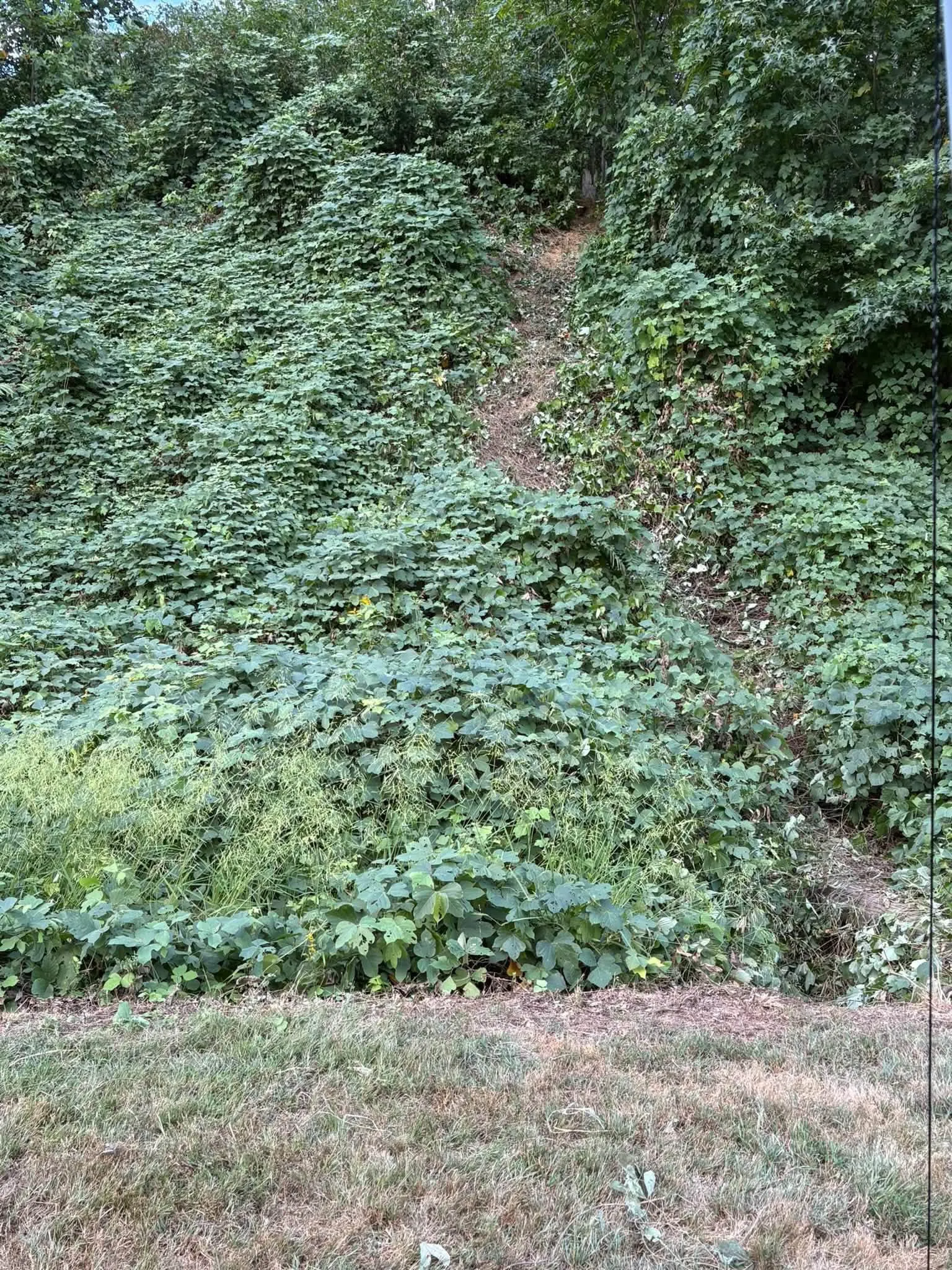
From the bottom of Rat Jaw it’s back on the road to the finish at the old Brushy Mountain prison.
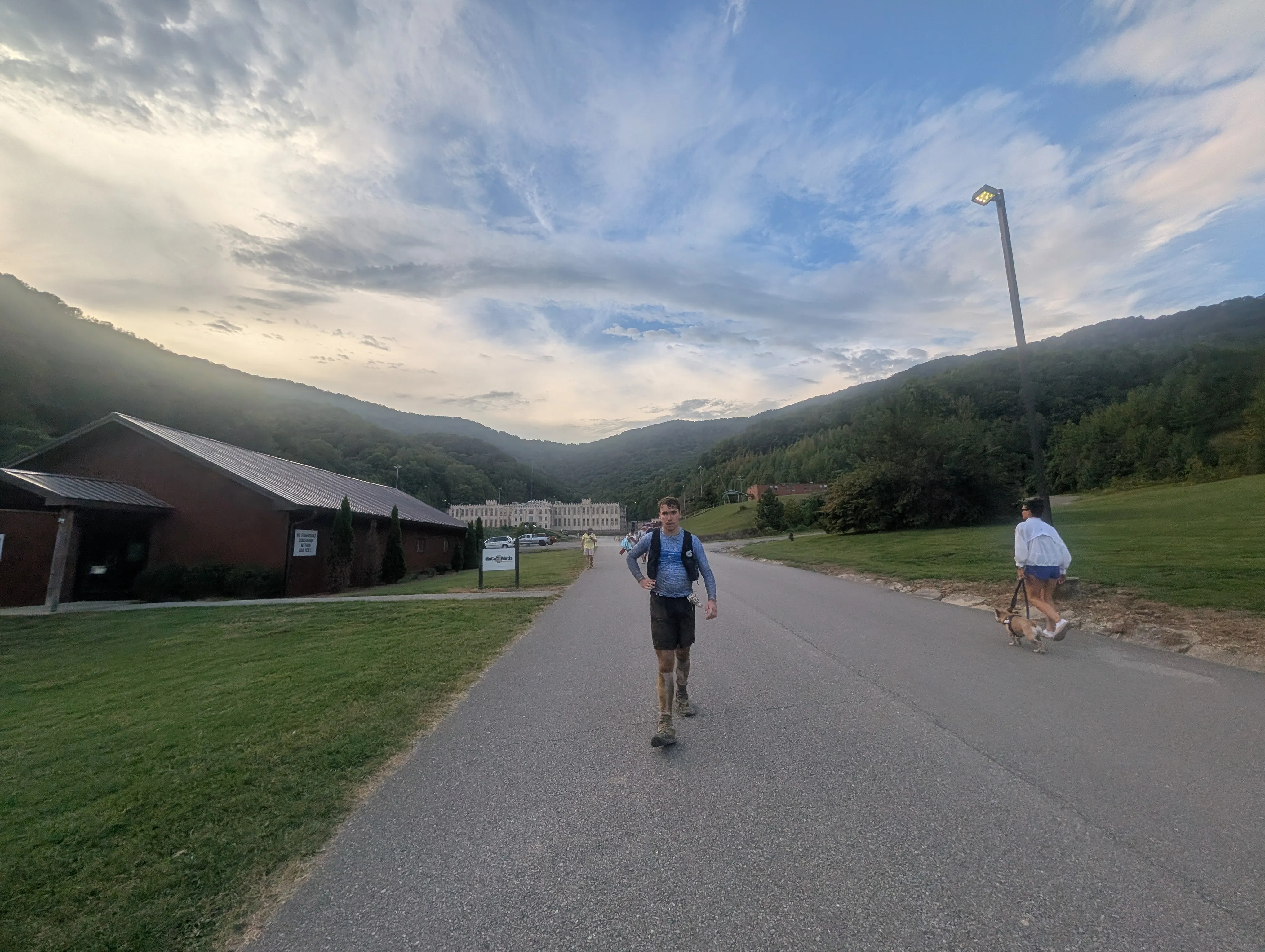
Ronnie never let go of the 50K. I tried to convince him during the race that he would avoid DNF if he just did the marathon this time. He said: “It’s more honorable to DNF and try than it is to not try and to finish the marathon.” I had joked that I’d enjoy watching his spirit break throughout the run, and I was sure his plan would change as he was beaten up by the mountains. It never did. His will stayed strong the whole way.
As it turned out though, we arrived at the decision point an hour past the 10h 20min cutoff. So the decision point was a forced decision for us: we had to stop at the marathon. We finished in about 11h 20min.
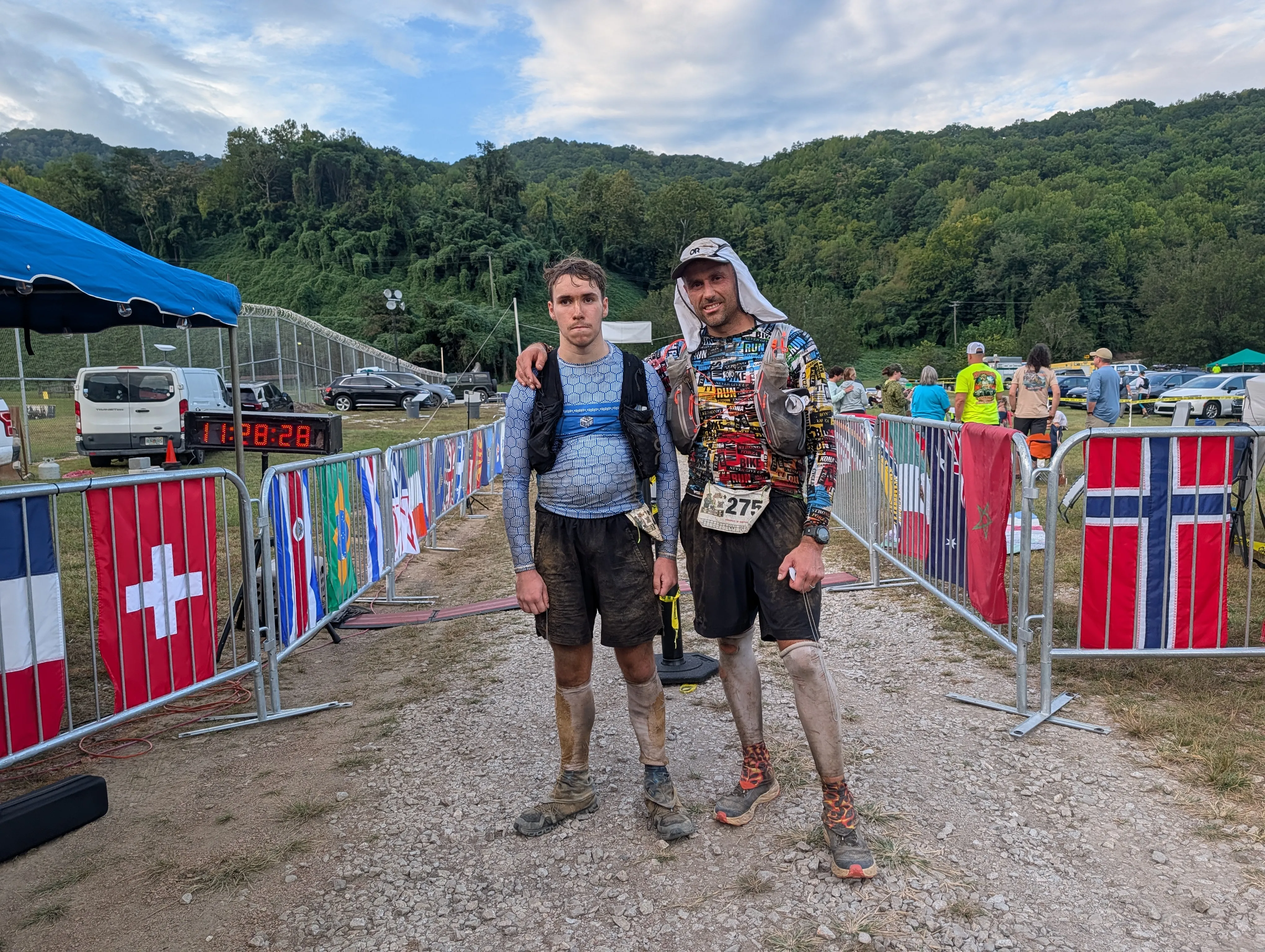
Ronnie still wanted to go back out. After the finish he went on about how he wishes the cutoff wasn’t so steep and that they’d let him go out again. His willpower was stronger than mine. I was happy with the planned marathon finish.
The marathon is probably a lie. But you aren’t allowed to wear GPS watches so you can’t measure it. At Sedona I was the one lying to Ronnie about how far we had left. At BFC it was kind of nice that the lying was built into the race!
After the decision point, the 50K course went up Big Rat and Rat Jaw first. Then there would have been 2 more major climbs with Meth Lab and Testicle Spectacle. The final 8km from the marathon to the 50K finish is probably more like 15km and required 4 hours for most people, which means if we wanted to finish the 50K we’d have to get in 2 hours earlier, at 9h 20min. Only 62 people finished the full 50K this year. Last year had the lowest finish rate with ~5% finishers, and this year had the 2nd lowest finish rate with ~12%. The winner, Seth King, finished in 10:20:07, 7 seconds after the decision point cutoff. The winner having a horrible finish time like this (relative to a normal 50K) really demonstrates how hard this race is.
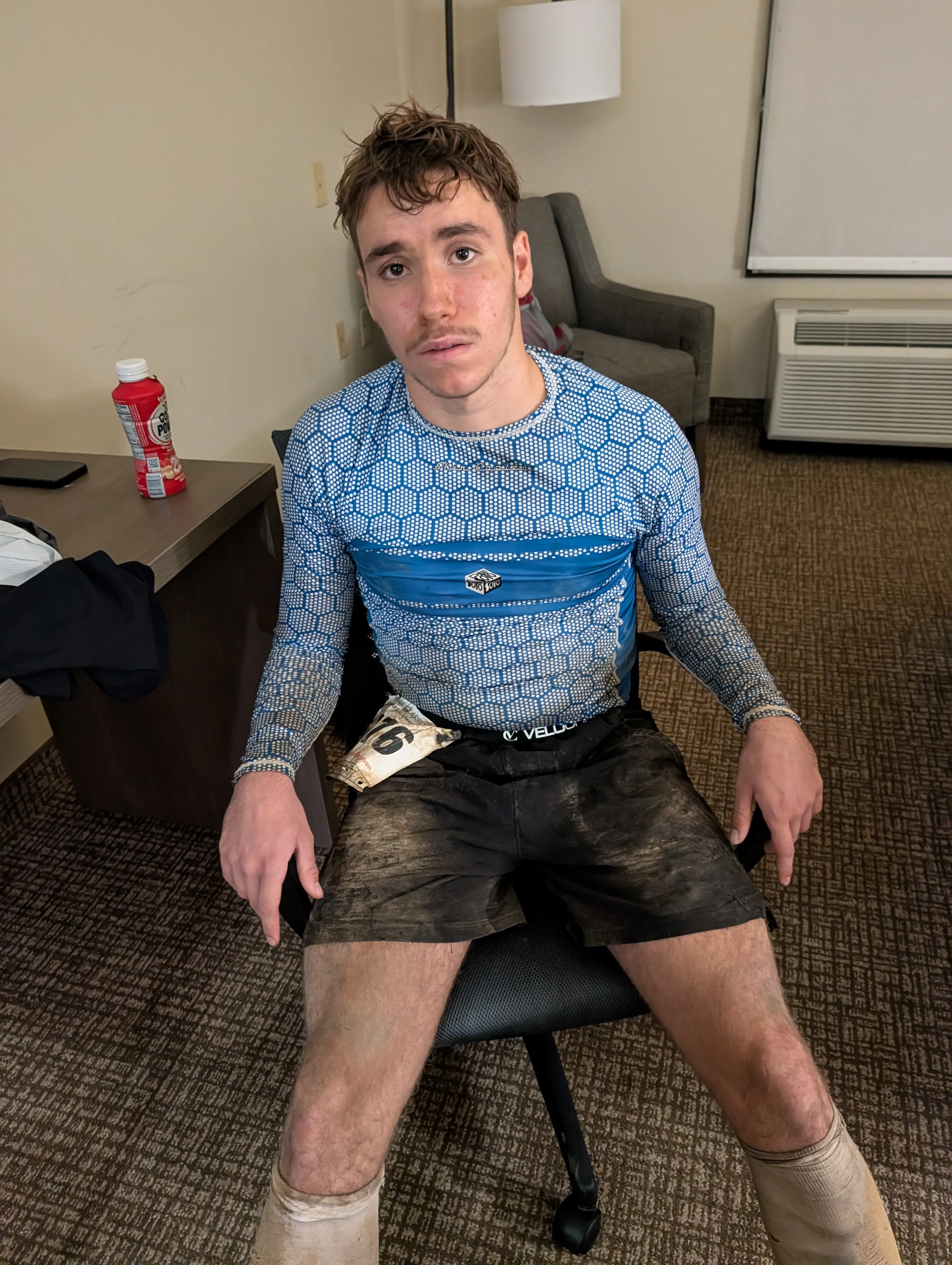
Back at the hotel, covered in mud. I was beaming with pride for the effort Ronnie put in. He worked hard, got it done, and his spirits stayed strong. But he was exhausted.
We ordered in some food to the hotel: spaghetti x2, salad for me, wings for Ronnie. Then we decided we needed drinks and ordered in 3 drinks each from McDonald’s (Refreshers, smoothies, and Coke).
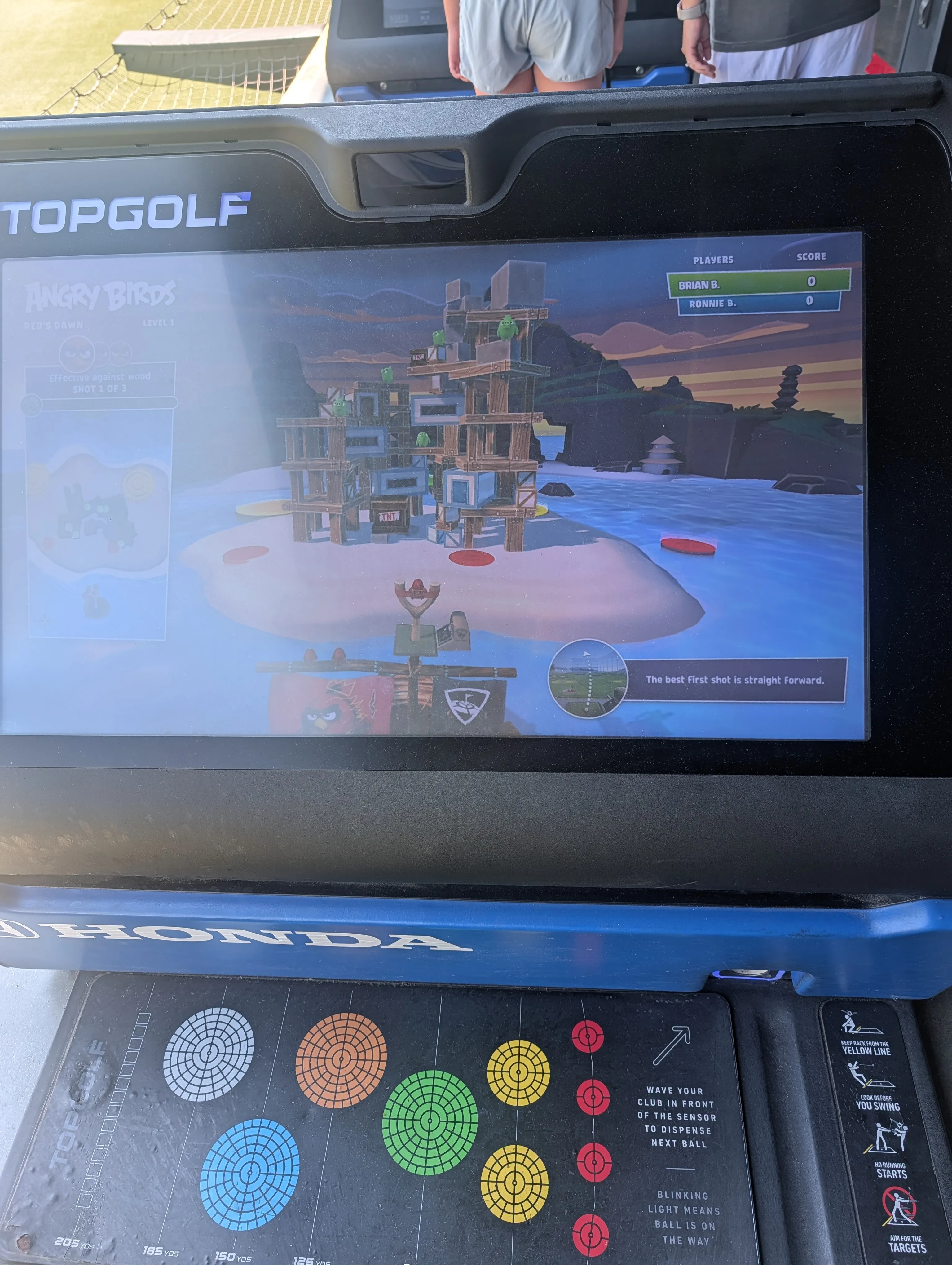
The next day we went to Topgolf. No briars, no climbing, and nobody lying about the distance.
I vowed never to do this race again, but changed my mind by the next morning. We can’t wait to get back.